
Last updated November 4, 2026
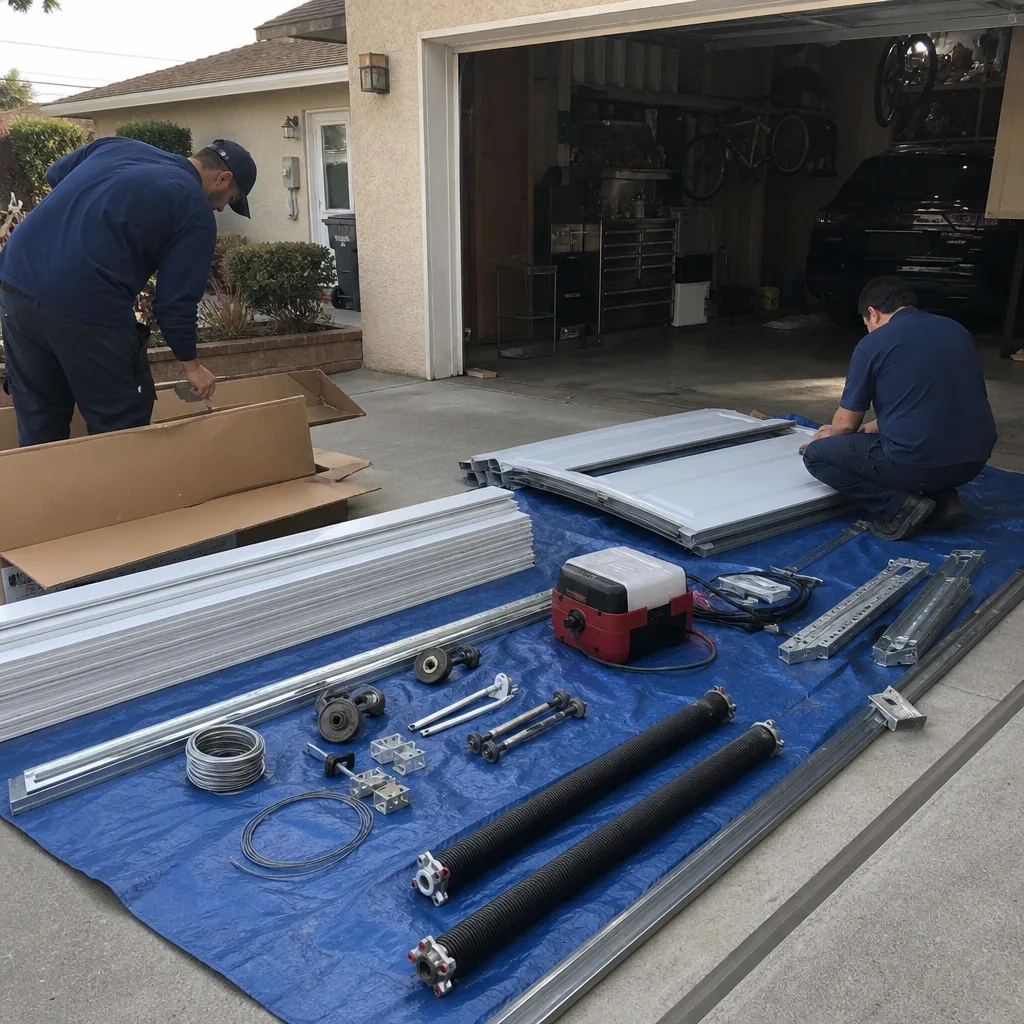
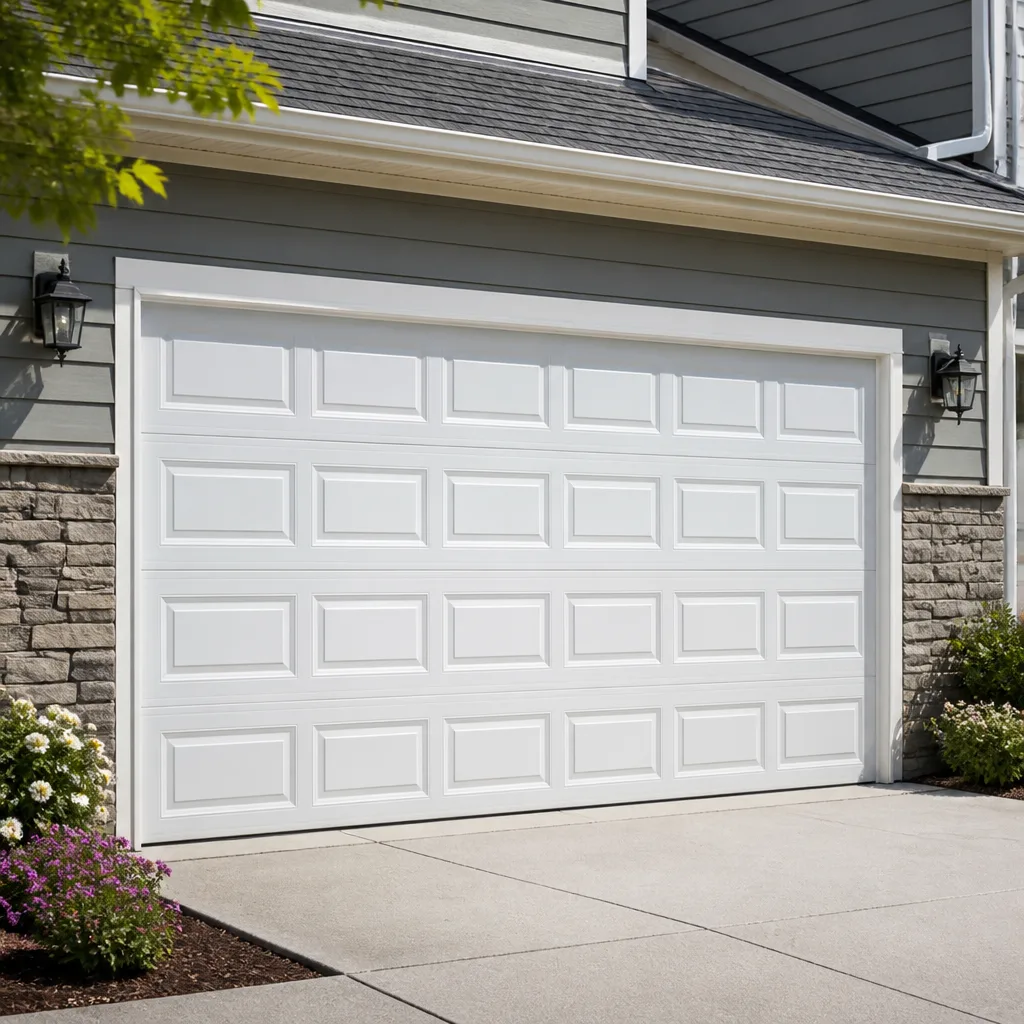 Raised-panel steel
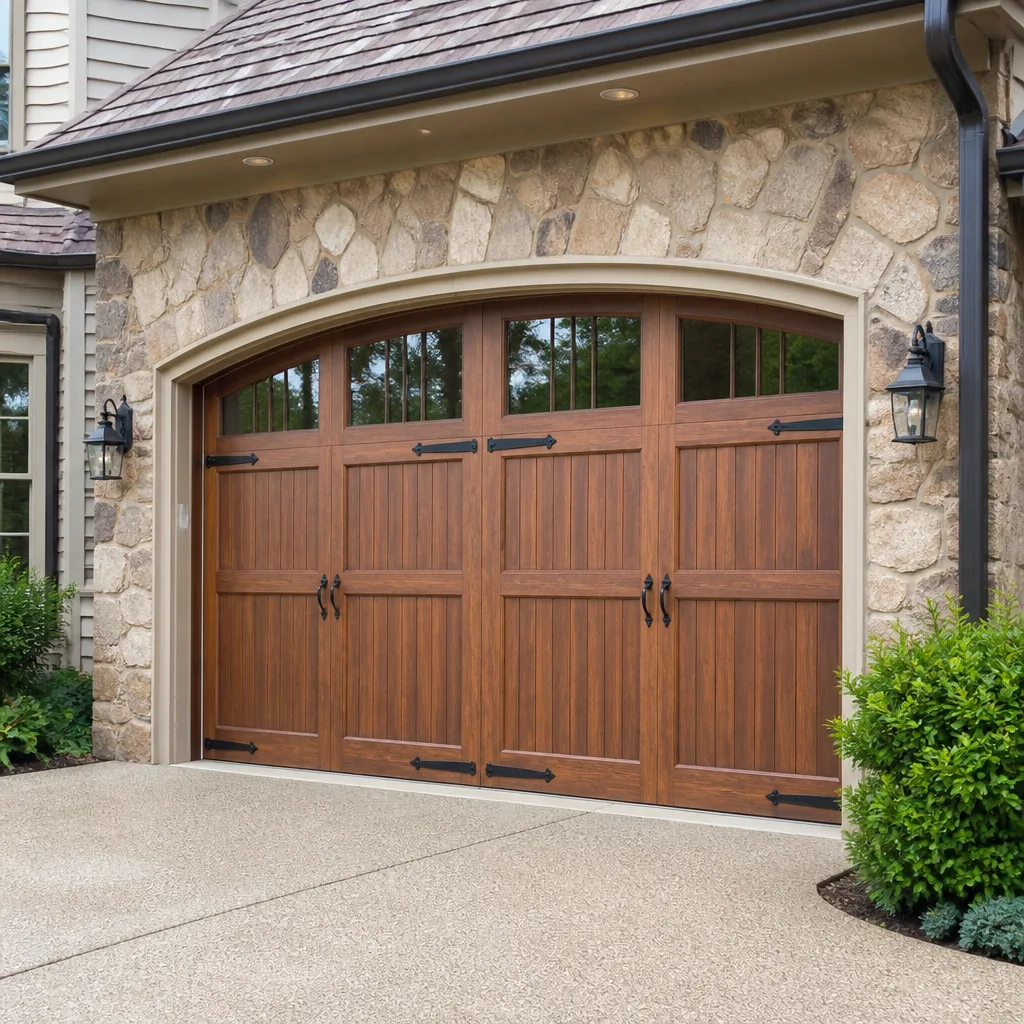 Carriage house
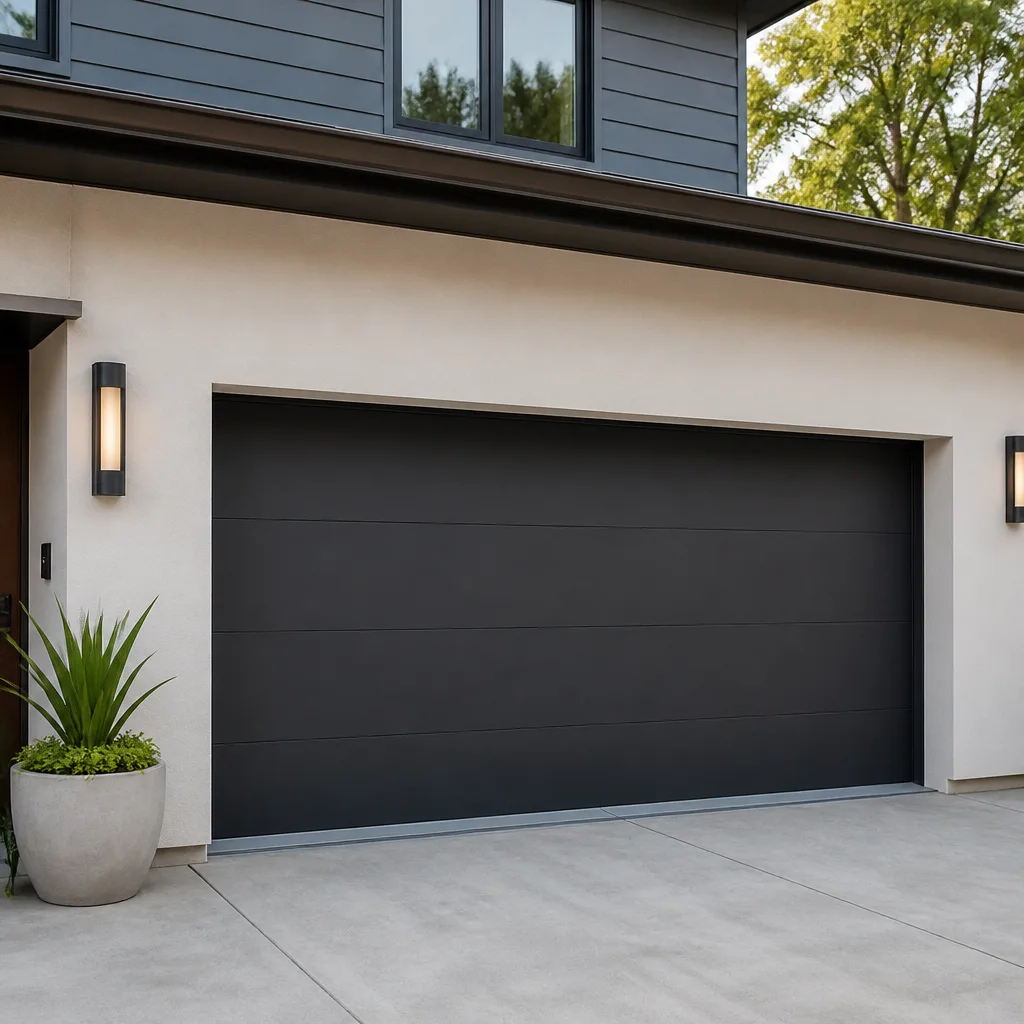 Modern flush
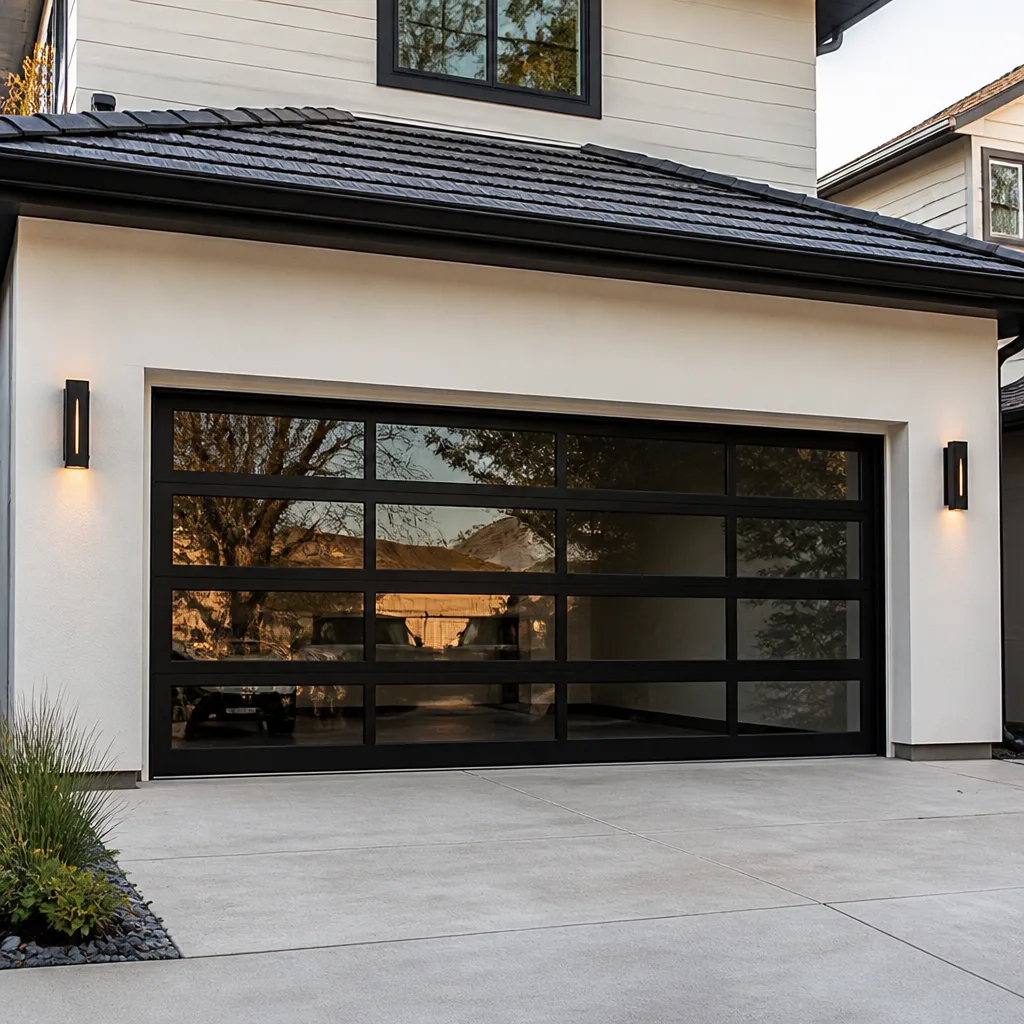 Full-view glass
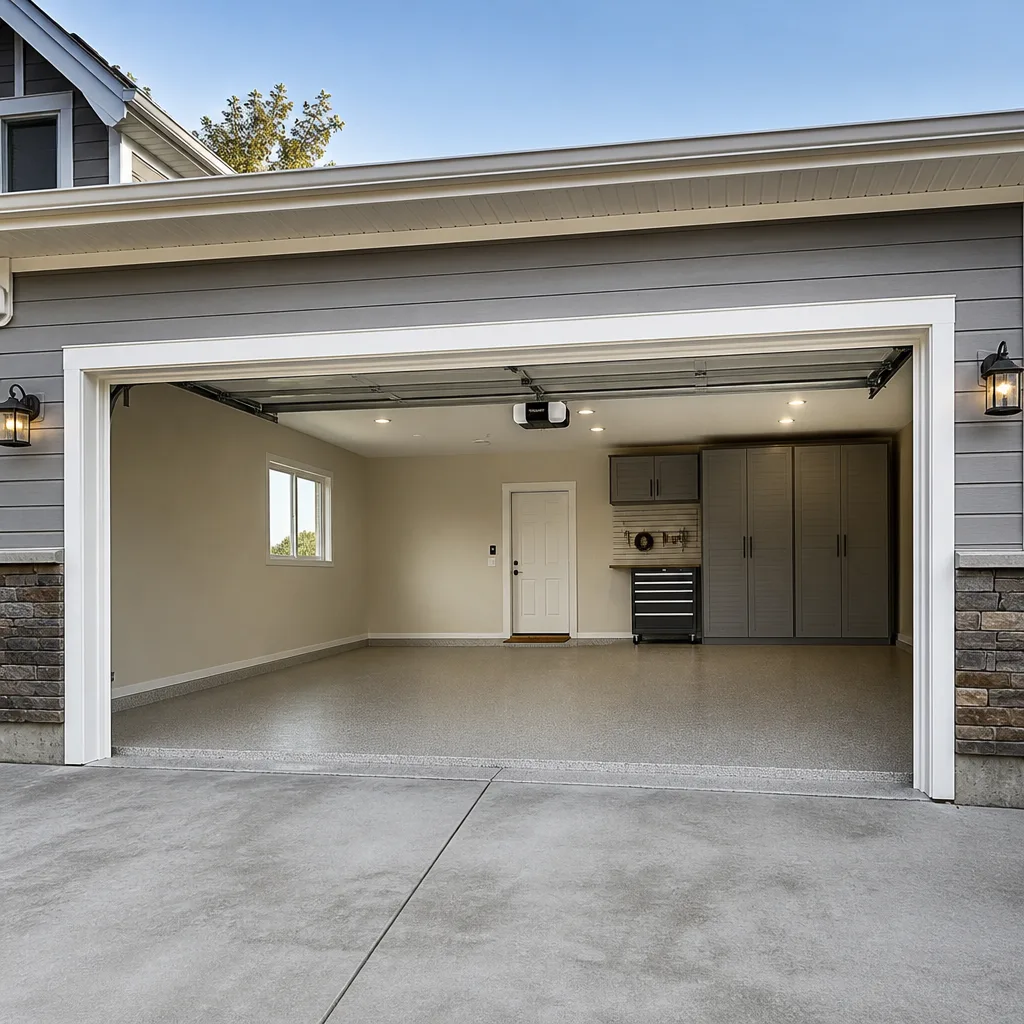 LiftMaster openers
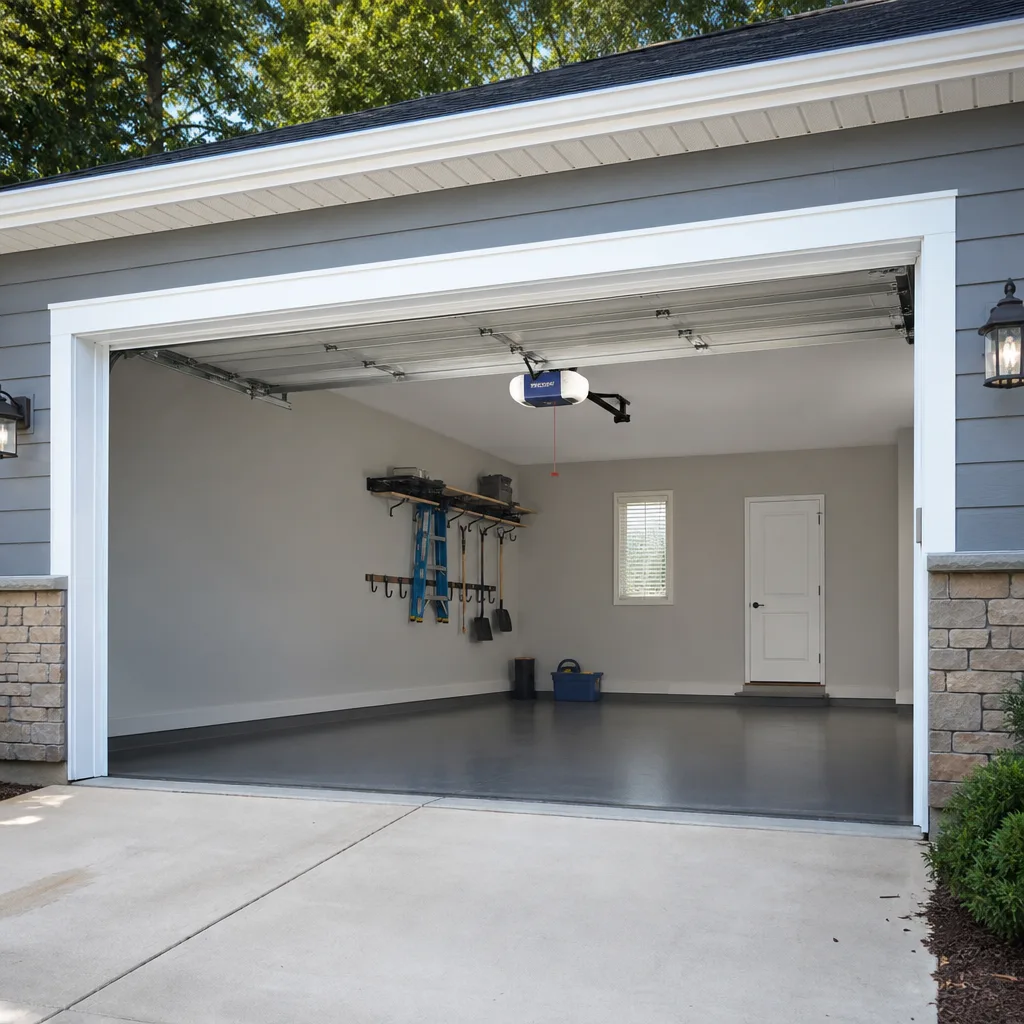 Chamberlain openers
Full 25-point door and opener safety check with every visit - springs, cables, rollers, tracks, and your LiftMaster or Chamberlain opener included
You get a price before we start. It does not change when the truck arrives.
Get your free estimateThe Complete Guide to Garage Doors in Norwalk
Most garage door guides assume every house has the same rough opening, the same header clearance, and the same framing tolerances. That assumption falls apart fast in Norwalk, where a substantial portion of the residential housing stock went up between 1950 and 1975. Those tract-home era builds have their own quirks: tighter side clearances, lower headers, and framing that predates modern door standards. This guide maps every garage door decision to Norwalk’s actual housing, climate, and building code reality. You’ll learn what actually matters when repairing, replacing, or choosing a door here, and which generic advice you can safely ignore.
Quick Answer
A garage door in Norwalk needs to handle dry Southern California heat, Santa Ana wind gusts, UV exposure that eats cheap finishes, and in many homes, a 1950s-to-1970s rough opening that doesn’t match modern sizes. The right approach starts with knowing your exact header clearance and spring type, then matching the door material and opener to a stucco tract home that sits in a seismically active county. A specialist who works on your specific brand, whether Clopay or Wayne Dalton, LiftMaster or Genie, will get further faster than a general contractor applying national averages.
Styles & brands we work with
- Raised-panel steel
- Carriage house
- Modern flush
- Full-view glass
- LiftMaster openers
- Chamberlain openers
Table of Contents
- Why Norwalk’s Housing Stock Changes Everything
- Header Clearance and Low-Headroom Reality in Tract Homes
- UV, Dry Heat, and What Actually Happens to Steel Doors Out Here
- Santa Ana Winds and Your Garage Door’s Weak Points
- Seismic Bracing and California Building Code in LA County
- Which Door Materials Hold Up Best in Norwalk
- What a Garage Door Specialist Does That a General Contractor Doesn’t
- Brand-Specific Repairs: Why Your Opener’s Logic Matters
Why Norwalk’s Housing Stock Changes Everything
Norwalk’s residential landscape is dominated by single-family stucco homes built during the post-war building boom. The city expanded rapidly from 1950 through the mid-1970s, which means a large share of local garages were framed to accommodate doors that were narrower, lighter, and mechanically simpler than what’s common today. Many of these original doors have been replaced at least once, but the rough opening itself usually remains unchanged. So when a homeowner wants a wider door, more insulation, or a wall-mounted opener, the framing underneath is often the real constraint.
For us, this means the first question on any installation or major replacement in Norwalk is not “what door do you want,” but “what was this garage actually built to hold.” A 16-foot-wide door from the 1960s may sit in a rough opening that a modern 16-foot door can’t seal against without modification. The springs, track radius, and openers all hang from structure that was probably adequate for the original wood door and may be less than ideal for a heavier modern steel door. Understanding this distinction is the difference between a clean install and one that fights the house.
Header Clearance and Low-Headroom Reality in Tract Homes
Header clearance is the vertical space between the top of the rough opening and the garage ceiling. Standard overhead doors need a minimum of 12 inches for a typical 7-foot door, and closer to 15 inches when a torsion spring system and horizontal track are involved. Many Norwalk tract homes, especially those built in the 1950s and early 1960s, have 8 to 10 inches. That gap may have been plenty for the original tilt-up door but it isn’t enough for a conventional sectional roll-up with standard hardware.
When clearance runs short, the solution is either a low-headroom track kit or a wall-mounted opener. Low-headroom track alters the angle of the horizontal section so the top panel follows a tighter arc. These kits work, but they put additional strain on springs and cables because the door travels a less natural path. Wall-mounted openers like newer LiftMaster and Genie models eliminate the center rail entirely, freeing the ceiling and sidestepping the header issue altogether. If your garage has less than 12 inches above the opening, do not start with a standard rail opener. Start by measuring the clearance, then choose hardware that fits the house rather than forcing the house to fit the hardware.
Here’s the measurement sequence we follow on every Norwalk installation:
- Measure the width of the opening at the top, bottom, and middle. If the three numbers differ by more than half an inch, the framing has settled or was never square.
- Measure the side clearance from the edge of the opening to the nearest interior wall. Tract homes often have under 4 inches on one side, which limits track options.
- Measure the headroom from the top of the opening to the lowest ceiling obstruction, including light fixtures and joists.
- Measure the backroom depth from the opening to the back wall of the garage. A standard sectional needs roughly the door height plus 18 inches.
- Record the spring type and count. A low-clearance door with a high-cycle torsion spring behaves differently from one with extension springs.
These numbers determine what’s actually possible. Guessing from a photo or a national template will cost you time and, in some cases, a restock fee on the wrong door.
UV, Dry Heat, and What Actually Happens to Steel Doors Out Here
Southern California’s UV index runs high most of the year, and Norwalk gets long, direct afternoon sun on west-facing garage doors. That sustained exposure does two things. First, it fades and chalks factory finishes faster than most manufacturers’ warranty charts anticipate, because those charts are weighted toward the national climate average, not inland LA County. Second, it breaks down the clear topcoat, especially on darker color doors that absorb more heat. Once that protective layer degrades, the color coat underneath starts oxidizing and the surface takes on that dull, washed-out look familiar to anyone who’s seen a 10-year-old door on a 1950s Norwalk cul-de-sac.
The practical takeaway: a steel door with a factory-applied, oven-cured polyester finish will hold its color longer here than a door with a lower-grade painted finish. Wood doors need more frequent resealing in Norwalk than they would in a cooler, cloudier climate. Fiberglass and some composite doors handle UV well but expand and contract at different rates than their steel frames, which can eventually loosen hardware. If your front face gets hours of afternoon sun, choose a lighter color and a premium finish. If you already have a dark door that’s gone chalky, plan on refinishing before the oxidation reaches the metal underneath.
Santa Ana Winds and Your Garage Door’s Weak Points
Santa Ana events bring dry, sustained wind from the northeast, often gusting hard enough to rattle a two-car garage door. These winds don’t just make noise. On a sectional door, repeated wind loading works the hinges, rollers, and track brackets loose over time. On doors with older extension spring systems, a sharp gust can lift the door a few inches and then drop it, putting sudden stress on the cables and safety catches. Doors with worn or misaligned tracks show the damage fastest: the panel flexes, the rollers bind, and the opener starts pulling unevenly.
The weak points to watch during wind season are the lower roller brackets, the center hinges, and the bottom seal. Loose lower brackets let the bottom panel twist, which causes the door to rack diagonally. If you hear a rhythmic banging when the wind blows, something in the track or roller assembly has play. A quick check from a garage door repair technician can identify whether it’s a simple tightening or a bracket that’s started to pull from the panel. Wind exposure also argues for a torsion spring system over extension springs. Torsion systems resist lateral movement better and are less likely to snap a cable during a sharp gust.
Seismic Bracing and California Building Code in LA County
LA County enforces seismic bracing requirements under California’s building code, and garage doors are part of that picture even though they’re often treated as an afterthought. The code addresses anchoring of the door assembly to the structure, reinforcement of the surrounding wall, and in some applications, connection details between the tracks and the header. Homes built before current seismic standards were adopted may or may not have been retrofitted. If your garage door tracks lag into nothing but stucco and a single top plate, the assembly has less lateral resistance than the code intends.
For a homeowner, the relevant questions are whether the track brackets are anchored into solid framing, whether the header is intact and not notched from past plumbing or electrical work, and whether the opener is securely bolted to a structural member. If you’re installing a heavier door than what was originally there, brace the opening first. Most cities require a permit for significant door changes, and Norwalk is under LA County’s jurisdiction, so check with the city’s building department before changing the rough opening or adding structural reinforcement. A specialist can tell you what’s likely to be required, but the permit itself goes through the city.
Which Door Materials Hold Up Best in Norwalk
Norwalk’s climate is dry most of the year, with no freeze-thaw cycles to speak of. That removes one set of problems but swaps in another: sustained UV, occasional high wind, and dry air that can shrink and crack certain materials. Here’s how the common options compare locally:
- Steel: The most practical choice for most Norwalk homes. Handles the climate well, holds its structure, and can be ordered with high-cycle hardware. The caveat is finish quality: a lower-cost steel door with a thin paint coat will fade and chalk faster here than elsewhere.
- Aluminum: Lightweight and rust-free, but prone to denting. Full-view aluminum doors with glass panels look great on mid-century and contemporary homes but offer little thermal resistance and get hot in direct sun.
- Wood: Beautiful on the right Norwalk home, but high maintenance. Dry heat pulls moisture from the wood, causing panels to contract, crack, and separate at the joints unless refinished regularly. Solid wood doors are also heavy enough that spring life becomes a recurring cost.
- Fiberglass: Good UV resistance and less denting than steel, but panel flex is a known issue in wind. Fiberglass doors work better in sheltered garages than on east-west facing homes with open exposure.
- Composite: A middle ground that’s gaining traction. Holds finish well, doesn’t dent easily, and handles dry air better than solid wood. The main drawback is weight and cost compared to entry-level steel.
For a 1960s Norwalk tract home with a west-facing door, our typical recommendation is an insulated steel door with a mid-to-upper tier factory finish, paired with a torsion spring system and nylon rollers. That combination balances the UV exposure, the wind flex, and the dimensional constriction of an older opening. Clopay and Amarr both make models we’ve seen perform well in this local environment, but the hardware underneath matters as much as the panel itself.
What a Garage Door Specialist Does That a General Contractor Doesn’t
A general contractor sees a garage door as one line item among twenty on a larger renovation. They’ll often quote a standard door, hire a subcontractor to install it, and move on. A garage door specialist lives inside the tolerances: the spring calculation, the track radius, the opener force profile, the drum wrap, the cable tension. When a door in Norwalk needs a low-headroom conversion or a brand-specific logic board, those are the jobs where a generalist’s estimate starts to drift from what the work actually requires.
The difference shows up in three ways. First, diagnostics: a specialist can identify whether a noisy door is a spring issue, a roller issue, or an opener logic issue without cycling through parts on your dime. Second, parts availability: a specialist carries or sources the correct torsion springs, drum sizes, and limit hardware for your exact door model, rather than grabbing whatever fits at the local supply house. Third, sequencing: a specialist won’t sell you a new door when the old one needs a cable and a spring tune-up. This matters in Norwalk specifically because so many homes need adaptation work: an old opening, a non-standard size, a header that’s half an inch lower than the door manufacturer wants. None of that shows up in a standard quote, and all of it determines whether the door actually operates cleanly for years.
Brand-Specific Repairs: Why Your Opener’s Logic Matters
Openers are no longer dumb motors. A modern LiftMaster, Chamberlain, Genie, or Craftsman unit runs on manufacturer-specific control logic: travel limits, force sensitivity, security protocols, and accessory integration are all handled through firmware that differs between brands. A technician who treats every opener as a generic motor will eventually reset a limit wrong, misdiagnose a force-sensing issue, or install an incompatible safety eye. The more sophisticated the opener, the more that brand-specific familiarity matters.
In our experience, a significant share of opener calls in Norwalk fall into two categories. The first is a door mechanical problem that’s making the opener work harder than it should, misread as an opener failure. The second is an actual opener logic problem that won’t respond to a generic reset: a bad travel module, a failing logic board, or a security protocol that needs re-pairing. Knowing whether you’re holding a Ge ni screw-drive unit from 2012 or a wall-mounted LiftMaster from 2023 changes the diagnostic path immediately. That’s the difference between brand-matched know-how and generic parts guessing. It’s also why the same technician should look at both the door and the drive system rather than splitting the job across two trades.
Common Mistakes to Avoid
- Buying a door based on a national price chart. Norwalk’s housing mix includes enough older framing and non-standard rough openings that a “standard” door often isn’t standard at all. Measure first, buy second.
- Ignoring header clearance. Many local tract homes have tight headroom, and a standard rail opener physically won’t fit without a low-headroom kit or wall mount.
- Replacing one spring instead of the pair. Torsion springs wear together. A matched pair replaced as a set restores balance; a single new spring on an old mate leaves the door fighting itself.
- Choosing the cheapest finish on a sun-facing door. The UV exposure on a west-facing Norwalk door will strip a thin finish faster than you’d think, and repainting a chalked steel door is more work than choosing a better finish upfront.
- Trying to adjust an opener’s force settings to mask a mechanical problem. If the door is binding, the correct fix is the door, not the dial. Cranking force to overcome resistance is how gears strip and boards burn out.
- Skipping the permit on structural changes. If the rough opening is changing or the header needs reinforcement, the city wants to know. Ask before you cut.
- Treating wind rattle as an annoyance to live with. Loose track during Santa Ana season is progressive damage. The longer it rattles, the more the brackets and hinges elongate.
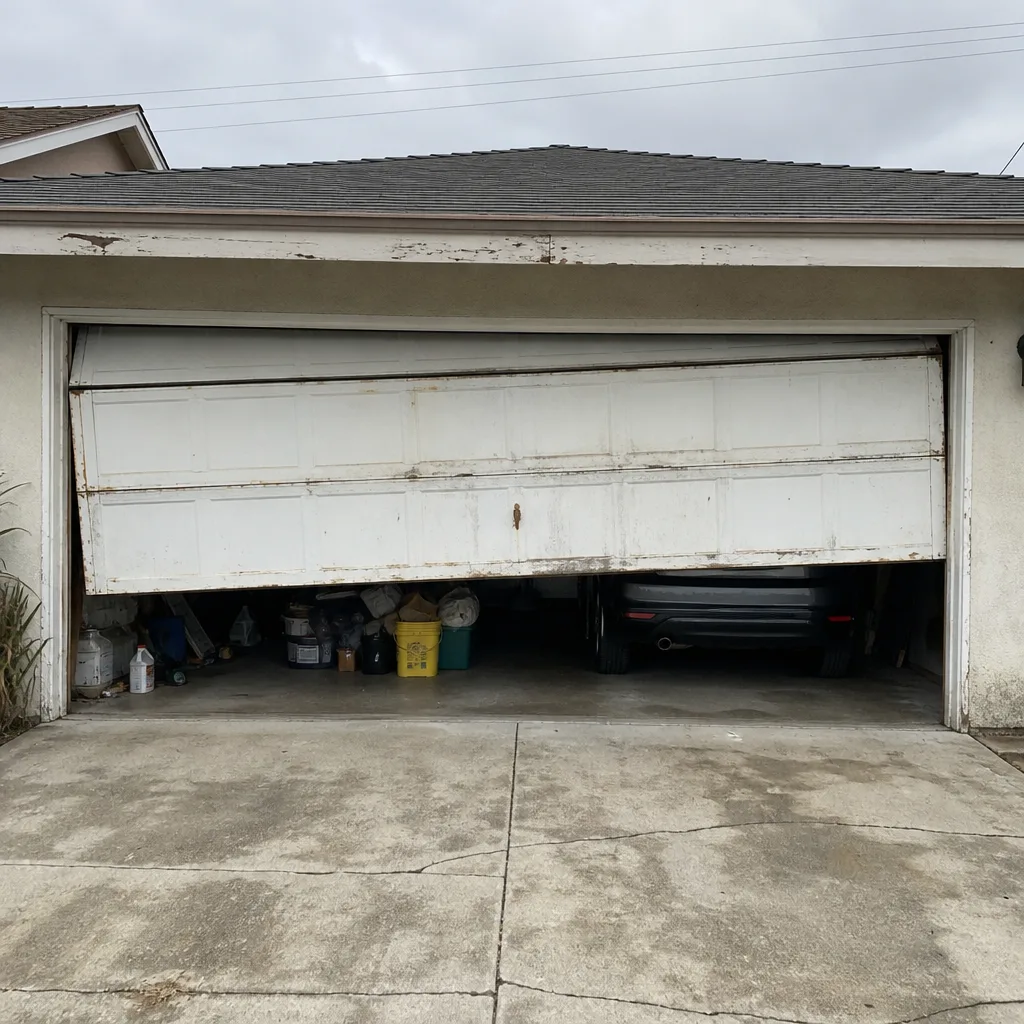
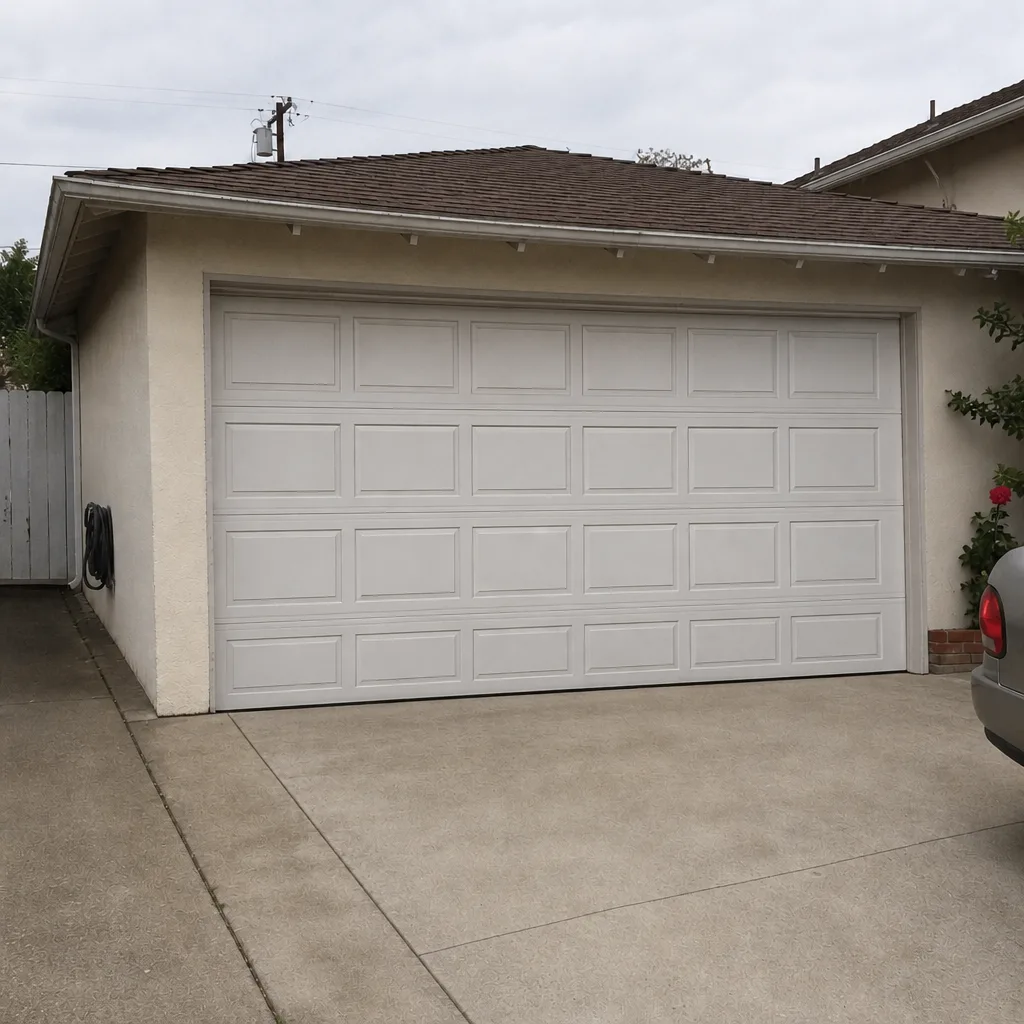
See the difference
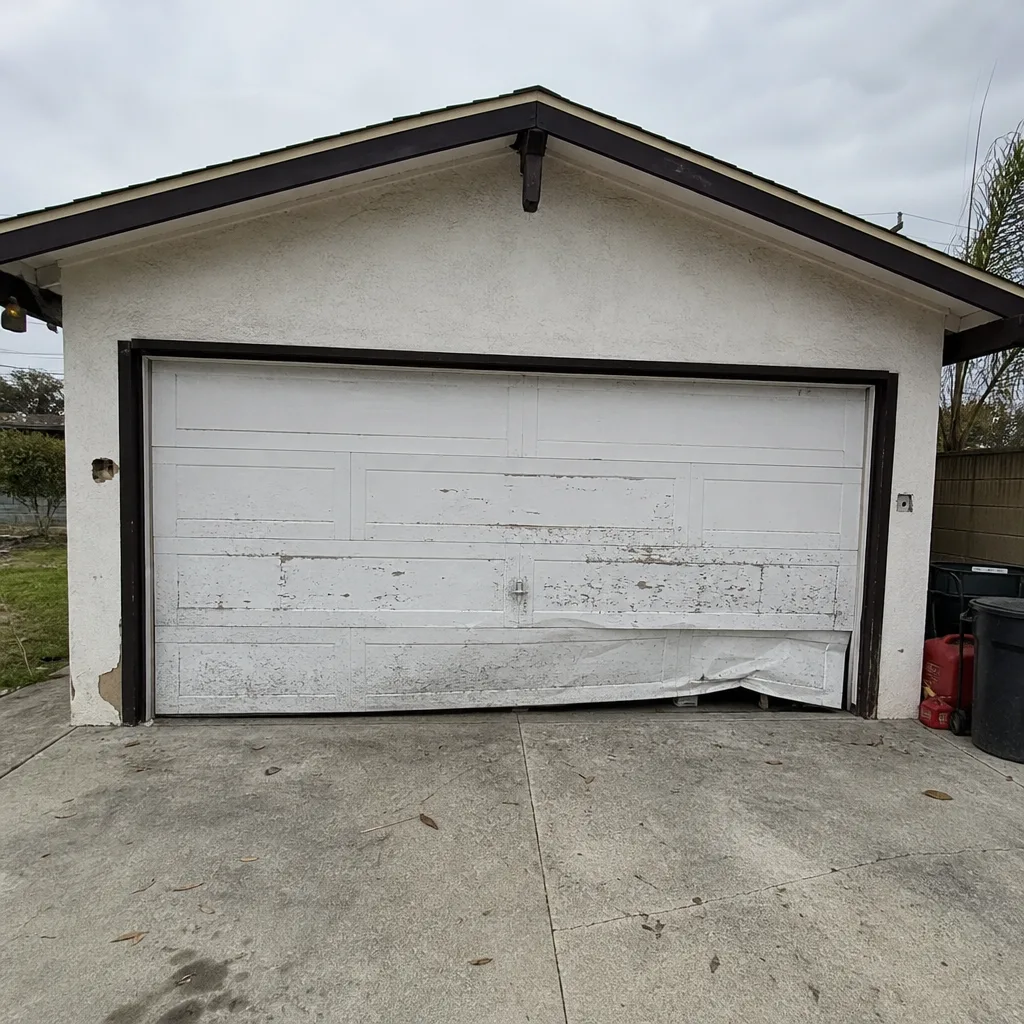 Before
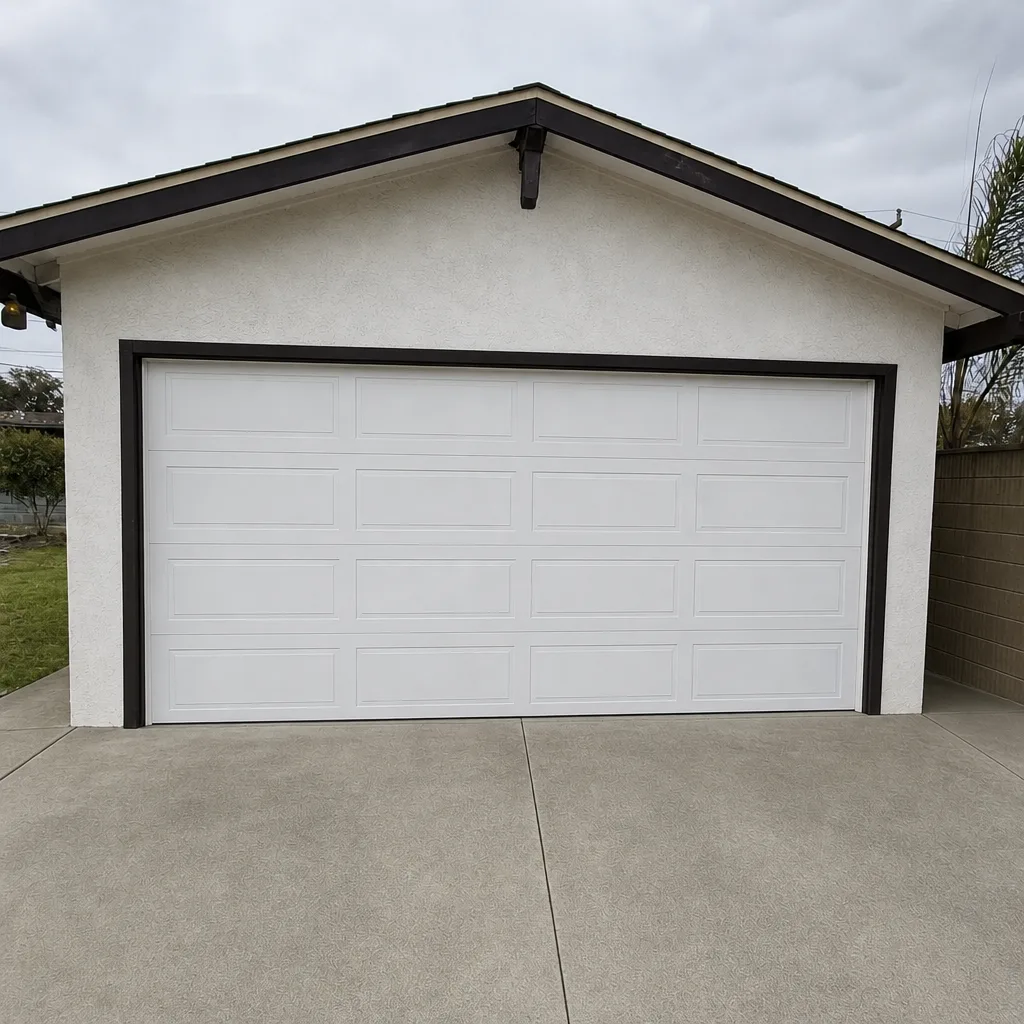 After
 Before
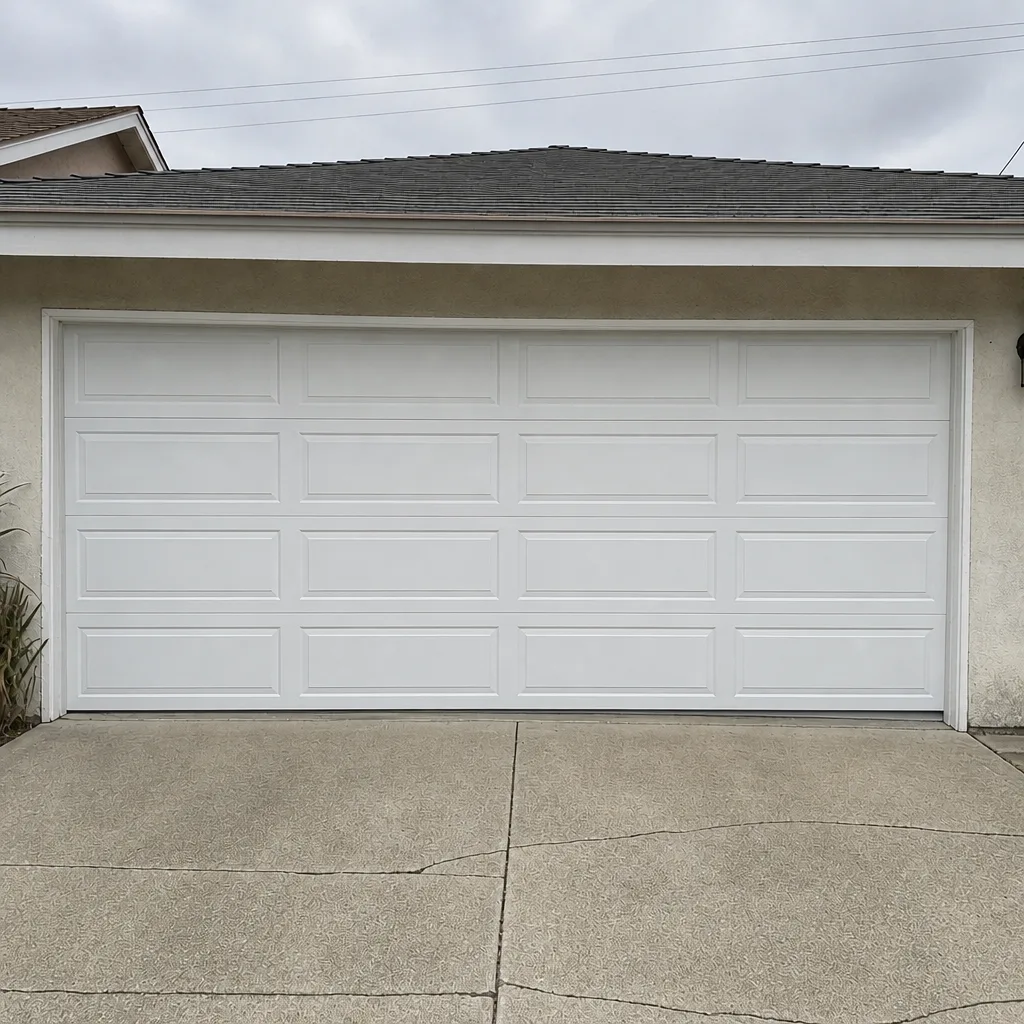 After
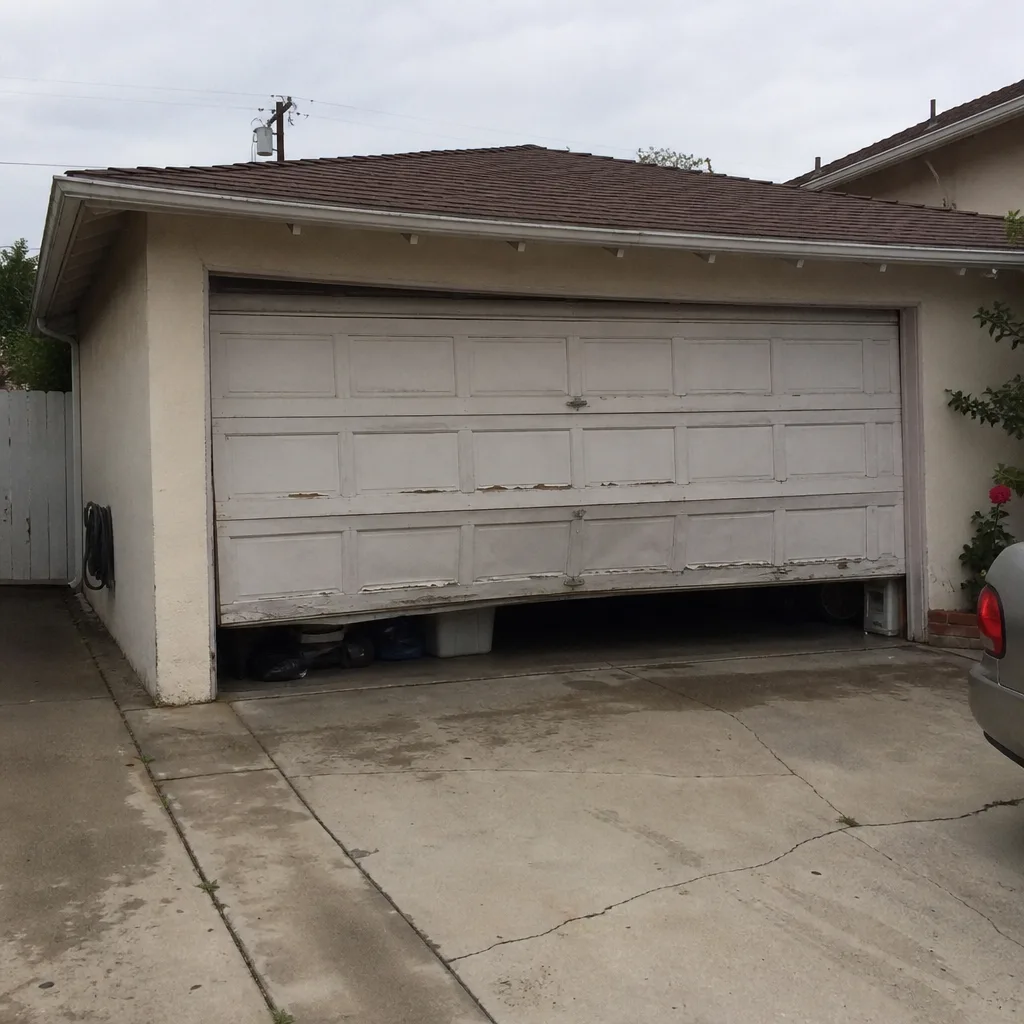 Before
 After
When to Call a Professional
A snapped torsion spring, a door that won’t stay open, an opener that reverses mid-cycle without any obstruction: these are the moments to stop guessing and call someone who sees this daily. A garage door is your home’s largest moving part, and a door that’s out of balance can fail without warning. If you’re in Norwalk and you’re chasing a noise, a bounce, a crooked rise, or an intermittent opener fault, get eyes on it before it gets expensive. Garage Door Service Norwalk offers free estimates in Norwalk. Call (833) 589-9971 and we’ll put a specialist on your exact brand and setup.
Frequently Asked Questions
Repair costs in Norwalk depend on what failed. A spring replacement, cable replacement, roller replacement, or track adjustment each carry different parts and labor. The written estimate sets the price before work begins. We don’t charge a service call fee to diagnose the issue, and the quote you get is the price you’ll see on the invoice. Call (833) 589-9971 for a free estimate. We answer 24/7. Fast dispatch from 7am to 7pm, Sunday through Friday.
In most cases, yes. Many opener repairs are diagnostic-first jobs: a limit reset, a force adjustment, a sensor realignment, or a logic board replacement. If the unit needs a part we don’t have on the truck, we can usually source it the same day. Call (833) 589-9971 for a garage door opener repair in Norwalk. We answer 24/7. Fast dispatch from 7am to 7pm, Sunday through Friday.
Manufacturer warranties vary by brand and door series. The door panel, hardware, and opener each carry their own terms. What we can say is that the written estimate identifies what you’re buying and what the manufacturer covers. Ask to see the specific warranty details for your door model before you sign.
A straight door-for-door swap on an existing opening usually doesn’t trigger a permit. If you’re changing the rough opening size, reinforcing the header, or altering structural framing, most cities in LA County require a permit. Check with Norwalk’s building department before committing to structural changes.
Wall-mounted openers from LiftMaster and Genie work well in low-headroom garages where a traditional center rail won’t fit. They mount to the side wall beside the opening and drive the torsion shaft directly. The main requirements are a torsion spring system and enough side clearance. If you’re unsure, a specialist can confirm in minutes.
A typical single-door replacement takes most of a day from removal to final testing. Custom-size doors or jobs that involve low-headroom track or structural bracing take longer. The written estimate includes a timeline specific to your project. Call (833) 589-9971 to schedule a free measure and get a written price.
The Bottom Line
Norwalk’s garage door reality is shaped by three things: a tract-home housing stock from the 1950s through 1970s, a dry high-UV climate, and a seismic code that most national guides never mention. The right door for this city starts with accurate measurements and honest brand-specific diagnostics, not a generic recommendation that ignores a lower header or a tight side clearance. Whether you’re repairing a tired Clopay steel door, sorting out a Genie opener that’s lost its limits, or planning a full replacement, the details matter. Work with a specialist who knows the brands and the local housing stock, and your garage door will last the way it should. Call (833) 589-9971 for a free estimate. We answer 24/7 and dispatch fast from 7am to 7pm, Sunday through Friday.
Written by the team at Garage Door Service Norwalk, serving Norwalk since 2014.