
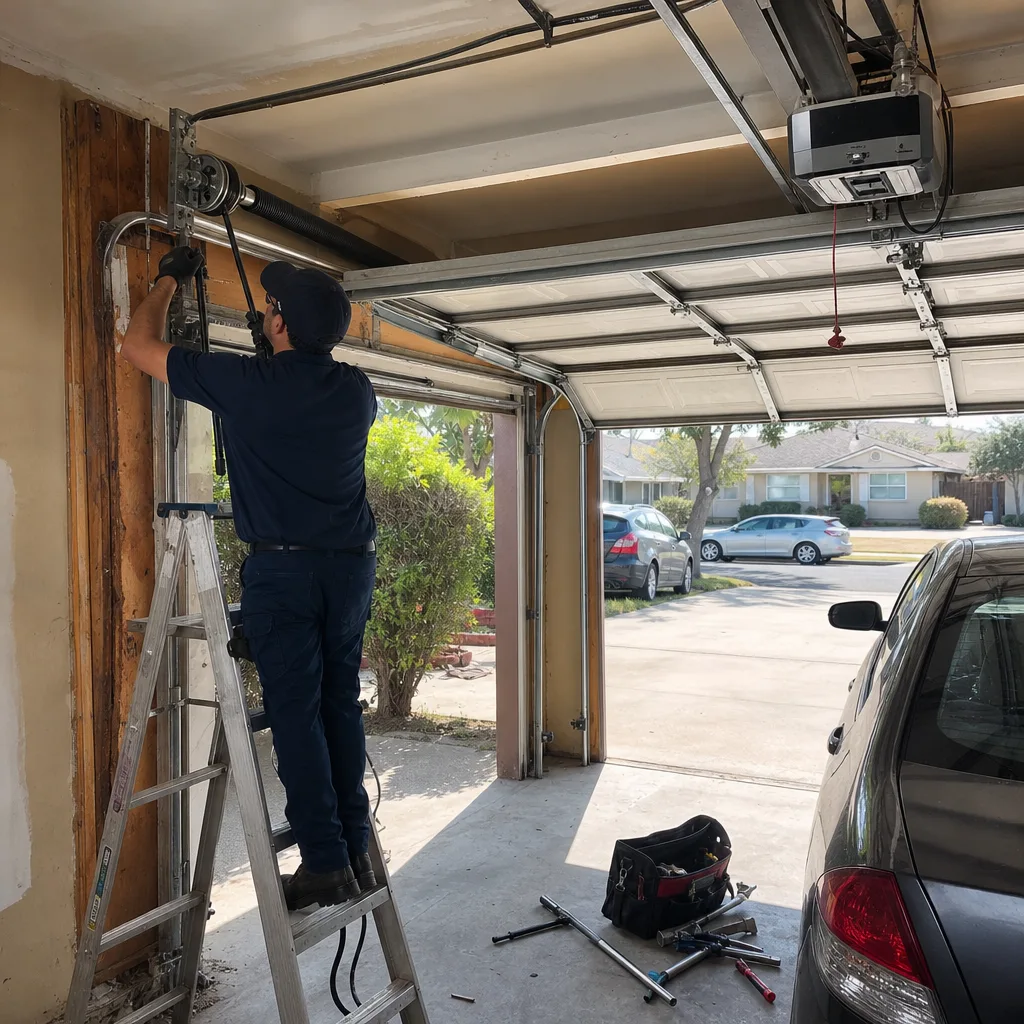
Last updated November 4, 2026
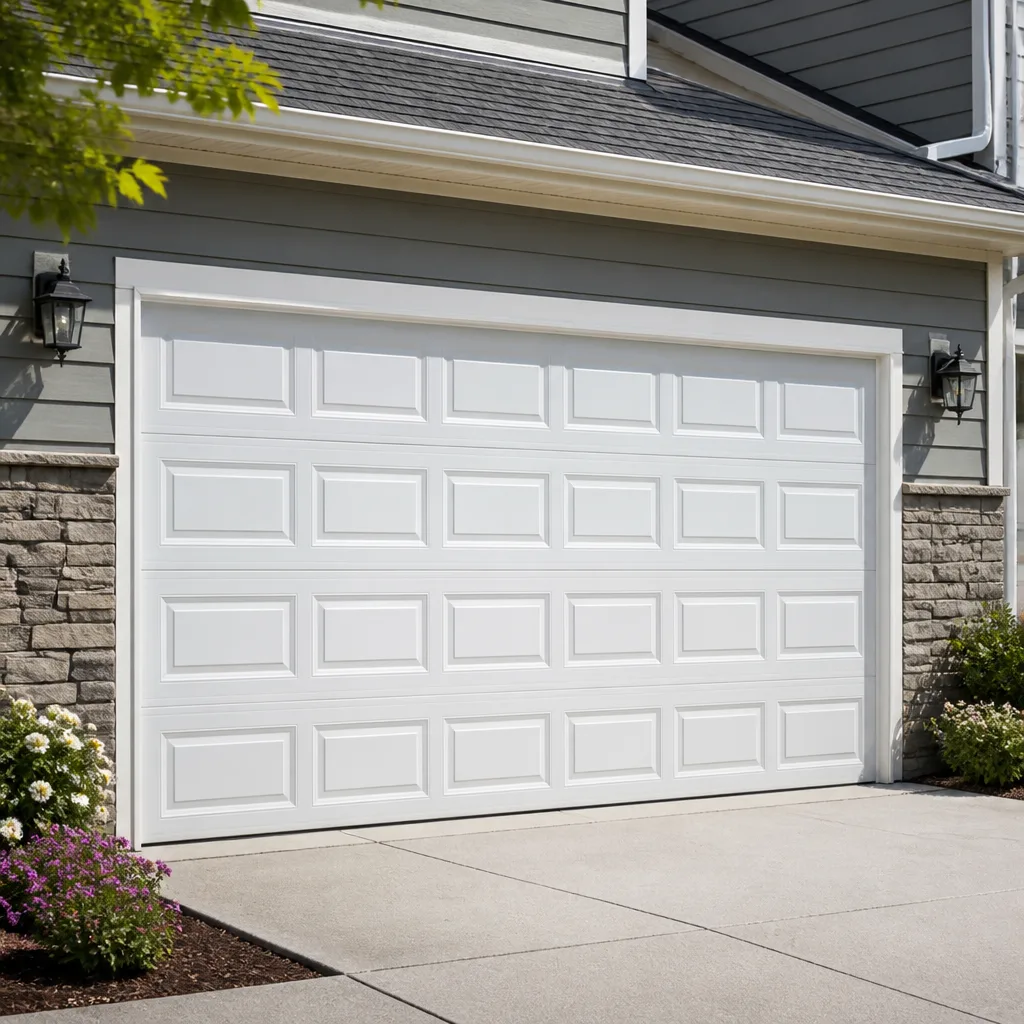 Raised-panel steel
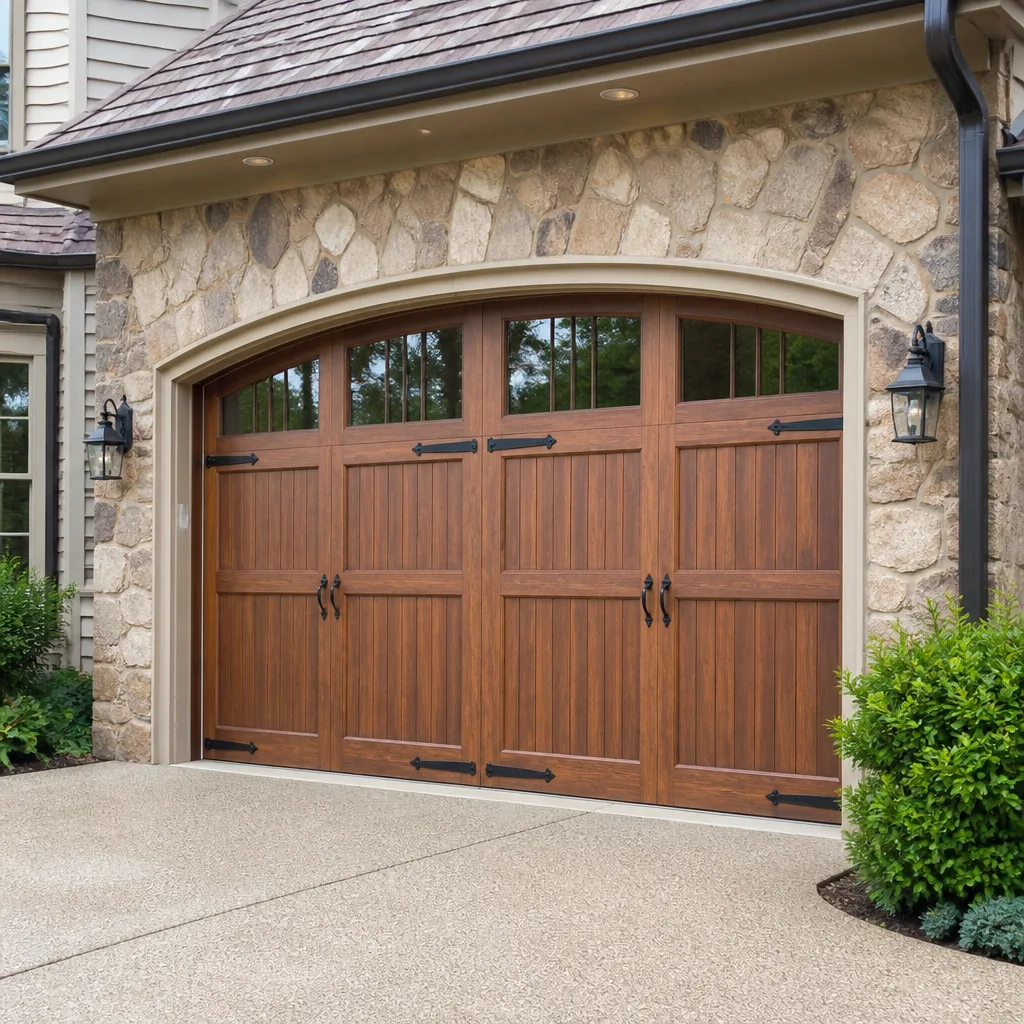 Carriage house
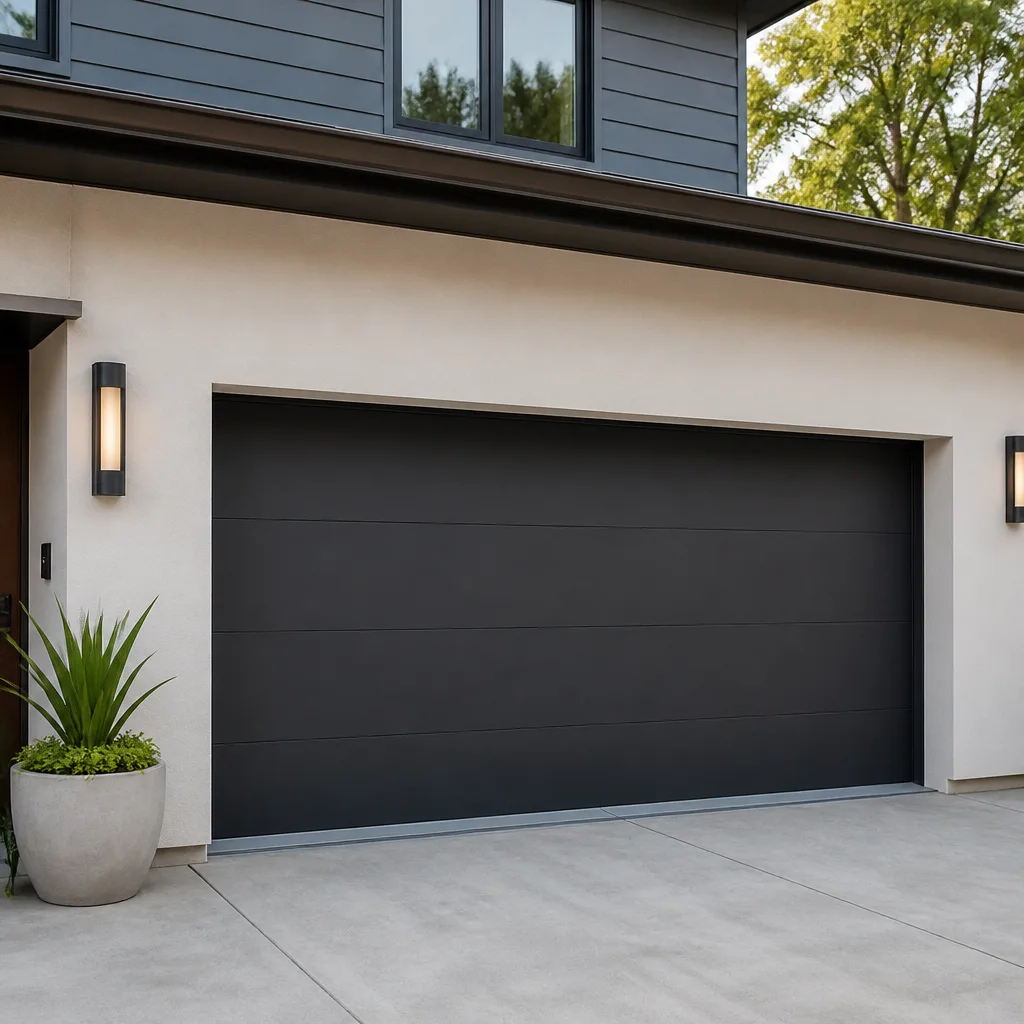 Modern flush
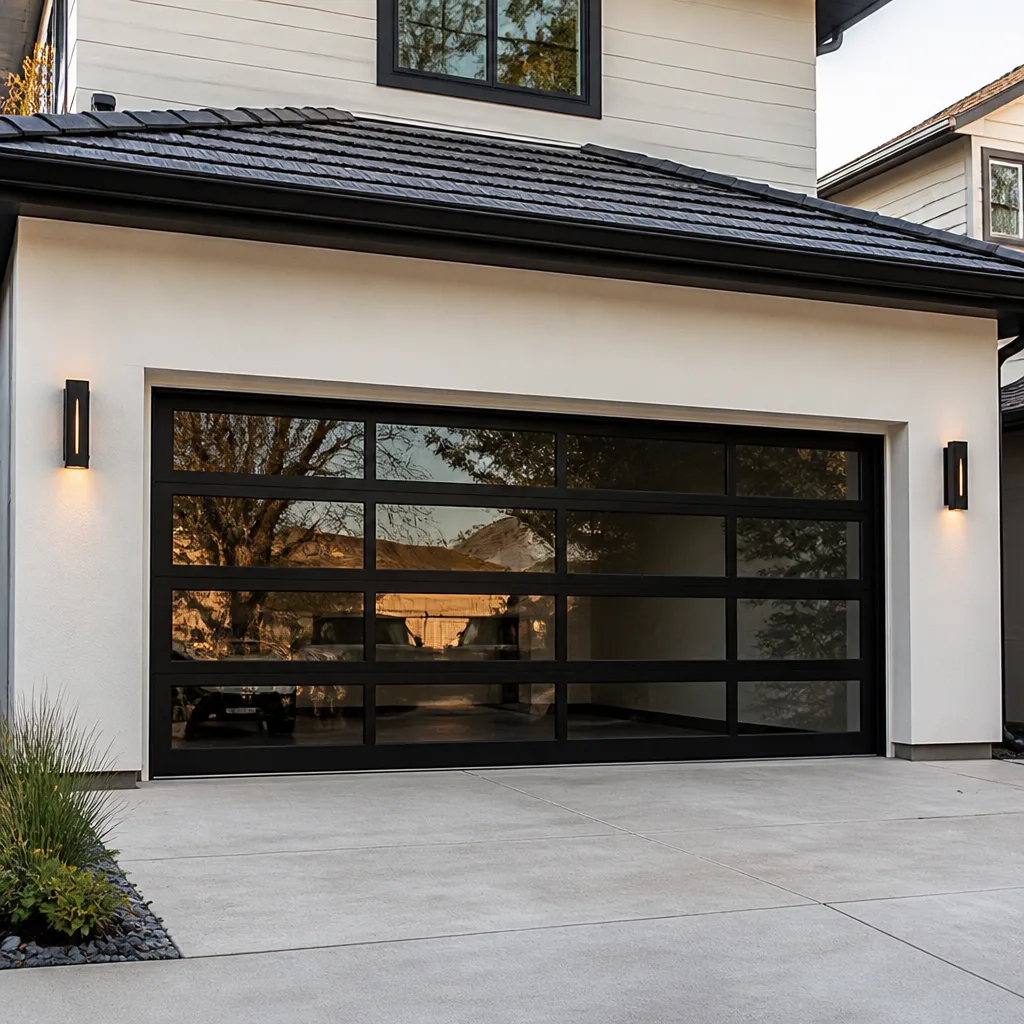 Full-view glass
 LiftMaster openers
 Chamberlain openers
Full 25-point door and opener safety check with every visit - springs, cables, rollers, tracks, and your LiftMaster or Chamberlain opener included
You get a price before we start. It does not change when the truck arrives.
Get your free estimateHow to Hire a Garage Door Contractor in Norwalk: A Step-by-Step Guide
Any contractor can say they “do garage doors.” The question that actually separates specialists from generalists takes about 15 seconds to ask and almost no homeowner thinks to use it. We’ll get to that. This guide walks you through how to evaluate a garage door contractor in Norwalk the way a specialist would, from license verification to reading a quote line by line. By the end, you’ll know the screening questions that surface real expertise fast, the red flags hiding in bland bids, and what a legitimate warranty actually looks like in California. A garage door is the largest moving part of your home. Hiring the wrong person to service it costs more than money.
Quick Answer
To hire a garage door contractor in Norwalk, verify their California contractor license on the CSLB database, confirm they specialize in garage doors rather than dabbling in them, ask brand-specific questions about your existing system, and get a written quote where parts, labor, springs, and track work are separate line items. A true specialist answers technical questions about spring sizing, cycle-life ratings, and your specific opener brand without hedging. Garage Door Service Norwalk offers free estimates and works on eight major brands, including LiftMaster, Chamberlain, Genie, Clopay, Amarr, Wayne Dalton, Craftsman, and Raynor.
Styles & brands we work with
- Raised-panel steel
- Carriage house
- Modern flush
- Full-view glass
- LiftMaster openers
- Chamberlain openers
Table of Contents
- Why Garage Door Specialization Matters More Than General Contracting
- Step 1: Verify the California Contractor License Before Anything Else
- Step 2: Ask the 15-Second Question That Exposes a Generalist
- Step 3: Probe Brand-Specific Knowledge of Your System
- Step 4: How to Read a Garage Door Quote Line by Line
- Step 5: What a Legitimate Warranty Looks Like in California
- Six Red Flags Specific to Garage Door Bids
- What Norwalk Homeowners Should Know About Local Conditions
Why Garage Door Specialization Matters More Than General Contracting
A garage door system is two machines working as one. There’s the door itself, a panel and track assembly that weighs anywhere from 150 to 400 pounds depending on size and construction. Then there’s the opener, a motorized drive unit with its own logic board, safety sensors, and force settings. A general contractor who also does plumbing, drywall, and roofing may have replaced a few doors. But they rarely carry the manufacturer-native parts for a Wayne Dalton torque-master spring system or understand the travel-limit calibration on a Chamberlain belt-drive opener. When the same technician handles the full mechanical picture, the diagnosis is faster and the repair holds.
In Norwalk, where nearly every home on a residential lot has an attached garage used as the primary entry point, downtime is not an abstract inconvenience. A door stuck open changes your morning. A door stuck closed means a car trapped inside. The practical difference between a specialist and a generalist shows up in how quickly the right part arrives and whether the repair addresses the root cause or just the symptom. A garage door specialist works on the whole system, from a broken spring to a full new door, without juggling unrelated trades or scheduling.
Step 1: Verify the California Contractor License Before Anything Else
In California, garage door installation and repair falls under contractor license classifications that regulate who may legally perform the work and charge for it. Most garage door contractors operate under the C-61 / D-28 classification, which the Contractors State License Board (CSLB) designates for door and gate work. Some hold a D-28 alongside other classifications, while others operate under a general building classification. What matters is that the classification they hold actually covers the work you’re hiring them to do. A general building contractor can legally manage a larger project that includes a garage door, but the person doing the door work should still be qualified for it.
Here’s the verification sequence we recommend to every Norwalk homeowner:
- Get the license number before the visit. Any legitimate contractor provides it on request. If they won’t give it over the phone, that’s your first red flag. The CSLB requires the number on all advertising, vehicles, and contracts.
- Look it up on the CSLB database. Go to the Contractors State License Board website and enter the number. Verify the status is active, not expired or suspended. Verify the name matches the company you’re talking to.
- Check the classification. Confirm the license covers door and gate work. If the contractor is licensed for landscaping but quoting garage door repair, you’re not protected.
- Check for workers’ compensation insurance. The CSLB database shows whether the contractor carries workers’ comp. If they have employees and no workers’ comp, you could be liable for an injury on your property.
- Ask for a certificate of insurance. Liability insurance is separate from the license. A specialist should be able to produce a certificate naming you as an interested party, usually within one business day.
None of this is bureaucratic busywork. An unlicensed contractor who gets hurt on your property can create a liability mess in California. A licensed contractor without the right classification can leave you without recourse if the work fails. Ask your city’s building department in Norwalk about any local permit requirements for structural changes, but license verification is state-level and applies to every job.
Step 2: Ask the 15-Second Question That Exposes a Generalist
Here it is: “How do you size a torsion spring for my specific door?”
That’s the question. A specialist answers immediately. They tell you that spring sizing depends on door weight, drum diameter, cable length, and track radius. They mention that a spring is rated for a certain number of cycles, usually 10,000 cycles for a standard spring and up to 25,000 or more for a high-cycle spring. They explain that the spring’s wire diameter, inside diameter, and length are matched to the exact weight of the door, not just the door’s listed model. They tell you that replacing one spring with a heavier or lighter spring than spec creates an imbalance that wears out the opener motor and other components prematurely.
A generalist hesitates. They might say they “always carry common springs on the truck” or that “one size fits most doors.” Both answers are warnings. Springs are not universal. A spring that’s too strong makes the door fly up. Too weak and the opener strains against the weight. The wrong spring on a heavy door is also a safety issue. Torsion springs store enormous energy. If one fails while under tension, or is installed incorrectly, the release of that energy can cause serious injury. This is genuinely dangerous work that should never be attempted without proper training and tools.
Ask the question. Listen to the answer. Fifteen seconds tells you more about who you’re hiring than a hundred five-star reviews.
Step 3: Probe Brand-Specific Knowledge of Your System
Most Norwalk homes have a branded system, even if the homeowner doesn’t think about it that way. The opener says LiftMaster on the housing. The door panels are stamped Clopay on the inside. The spring system is Wayne Dalton’s torque-master design. These are not interchangeable details. Each manufacturer has its own logic.
We work on eight industry-leading brands for a reason: LiftMaster, Chamberlain, Genie, Clopay, Amarr, Wayne Dalton, Craftsman, and Raynor. The reason isn’t to name-drop. It’s because brand-matched parts and know-how change the outcome of a repair. A Chamberlain opener’s travel limits are set differently from a Genie’s. A Raynor door’s track profile differs from an Amarr’s. A torque-master spring inside a tube is a completely different animal from a standard torsion spring on a shaft. If a contractor has never worked on the system you own, they’re learning on your door.
Here’s what to ask:
- “What brand is my current opener, and what are its most common failure points?” If they can’t identify the brand by looking at the unit, that’s a problem.
- “Do you stock manufacturer-native parts for my door, or do you use generic substitutes?” Generic rollers, hinges, and sensors work for a while. Manufacturer-native parts fit correctly and last longer.
- “Have you worked on torque-master spring systems before?” This is the Wayne Dalton enclosed spring design. A contractor who has never seen one will be visibly unsure.
- “What opener would you recommend to replace my current one, and why?” The answer should reference your door’s weight, size, and usage pattern, not just whatever brand they happen to have in the truck.
You don’t need to know the answers yourself. You need to hear whether the contractor does. A specialist talks about your specific system with the confidence of familiarity, not the enthusiasm of a sales pitch.
Step 4: How to Read a Garage Door Quote Line by Line
A legitimate garage door quote in Norwalk looks like a parts list plus labor, not a single number scrawled on a carbon form. When we write an estimate, we separate the items so you can see exactly where the money goes. Here’s how to read one, whether it’s for garage door repair or a full installation.
| Quote Item | What It Should Include | What to Watch For |
|---|---|---|
| Parts: door panels or sections | Manufacturer, model, R-value if applicable, finish | “Premium panel” with no brand or model named |
| Parts: springs | Type (torsion or extension), wire size, cycle rating, quantity | “Spring replacement” with no cycle rating or wire size |
| Parts: openers | Brand, model, drive type (belt, chain, screw), horsepower | “New opener” with no brand or model specified |
| Parts: rollers, hinges, cables | Material (nylon, steel), quantity | Lumped into a single “hardware” line without a breakdown |
| Labor | Separate line, with removal and haul-away if applicable | Labor folded into the parts cost with no transparency |
| Disposal | Freight and disposal of old door or opener | “Included” but not itemized, which usually means it’s padded elsewhere |
The rule is simple: every line item should name the part by brand and specification. “Premium panel” is not a specification. “Spring replacement” with no sizing information is not a quote. A specialist who does this work every day can tell you the spring wire diameter, the cycle rating, and why they chose it for your door. If they can’t, they’re selling a guess.
Also confirm that the price is quoted and agreed before any work starts. The written estimate sets the final price. If a contractor wants to start work before putting numbers on paper, walk away. Verbal estimates in California are difficult to enforce. You want a document.
Step 5: What a Legitimate Warranty Looks Like in California
Warranties on garage door work are only as good as the paper they’re printed on. In California, a verbal promise about future service is generally not enforceable in any meaningful way. If the contractor says “don’t worry, we’ll take care of it if anything goes wrong,” get that in writing or treat it as a courtesy, not a contract.
A legitimate warranty separates parts and labor, because those are different obligations from different sources:
- Manufacturer’s warranty on parts. Springs, openers, panels, and other components carry a warranty from the manufacturer. Read the fine print: a spring rated for 10,000 cycles may carry a 3-year warranty, while a 25,000-cycle spring might carry a lifetime warranty. The warranty reflects the expected cycle life.
- Contractor’s warranty on labor. This is the workmanship guarantee the contractor provides separately. It typically covers installation errors and comes in writing with a specific term. Ask how many months or years of labor warranty is included, and get it on the quote.
- What’s excluded. Most warranties exclude damage from misuse, acts of nature, or modifications by another contractor. If you have another company work on a door we installed, the manufacturer’s warranty may be affected. Ask about it.
If a contractor can’t point to the written warranty terms for the exact parts they’re proposing, they haven’t sourced the parts properly. A specialist quoting a Clopay door knows the Clopay warranty. A specialist quoting a LiftMaster opener knows the LiftMaster warranty. If the answer is “all parts are covered,” that’s a hand-wave, not a warranty.
Six Red Flags Specific to Garage Door Bids
- “Same-day, any spring” offers. Any spring means the wrong spring. A spring sized for a 150-pound door is not interchangeable with one sized for a 300-pound door. Contractors who promise same-day any-spring service are telling you they carry a one-size-fits-most inventory, which doesn’t exist. What they’re actually saying is they’ll install whatever is on the truck.
- Quotes without a site visit. A contractor who quotes a door replacement over the phone without looking at the existing track, headroom, and side clearance is guessing. Norwalk garage configurations vary widely by tract and era. Some garages have low headroom. Some have angled walls. The quote has to account for what’s actually there.
- Bundled pricing that hides the expensive line. When labor, panels, springs, and track are rolled into one number, there’s no way to compare against another bid. The bundle almost always hides overpricing on one component, typically the springs or the opener.
- No branding on the quote. “New door, white, insulated” is a red flag. A reputable installer specifies the manufacturer and model because the manufacturer’s warranty depends on it. A blank line means the contractor is buying whatever is cheapest at the supply house that week.
- Replacing the opener when the door is the problem. Some contractors default to replacing the motor because it’s a bigger invoice. If the door itself is off balance, dragging, or binding, a new opener just burns out against the resistance. A proper diagnosis identifies root cause first.
- Pressure to decide immediately. A garage door quote does not expire in 24 hours. Prices on doors and openers don’t fluctuate day to day. Urgency tactics are designed to prevent comparison shopping, which is exactly what a homeowner should do.
What Norwalk Homeowners Should Know About Local Conditions
Norwalk has a specific housing stock. The city developed heavily in the post-war boom, which means many homes have attached garages with single or double doors, often older wood framing and original track systems. Some neighborhoods have detached garages from the earlier period. The climate is mild, which is good news for garage door components: we don’t deal with freeze-thaw cycles, road salt, or ice jams that plague other markets. Hail is uncommon here. The main environmental factors are heat and sun exposure, which degrade rubber seals, nylon rollers, and opener circuit boards over time.
That mild climate doesn’t mean components last forever. Springs are rated in cycles, not years, and a heavily-used door in a Norwalk household, where the garage is the primary entry and exit point, can cycle 4 to 6 times daily. A 10,000-cycle spring under that usage translates to roughly 5 to 7 years of life. A 25,000-cycle spring can last 12 years or more. If you’re replacing springs, ask about the cycle rating. It’s the single most important specification on the quote.
Norwalk homes also span a range of eras, from 1950s ranch-style builds to newer construction. Older garages sometimes have low headroom, which limits the type of opener you can install. Newer homes may have higher ceilings that accommodate jackshaft openers, which mount on the wall beside the door rather than overhead. A contractor familiar with Norwalk’s housing stock will recognize these differences on sight and quote accordingly.
When you call a garage door company in Norwalk, you’re hiring someone to solve a problem that affects your daily routine. The right contractor diagnoses the system, quotes the parts by brand and specification, and stands behind the labor in writing. The wrong one makes the problem worse and charges you twice. The screening questions in this guide are designed to tell those two apart before you sign anything. They take 15 seconds each, and they work.
Common Mistakes to Avoid
- Hiring based on price alone. The lowest bid on a garage door repair is often the one that uses generic parts, skips the root-cause diagnosis, and returns in six months. Garage doors are a long-term system, not a one-time purchase.
- Skipping the license check. Unlicensed contractors in California cannot legally perform garage door work for money. If something goes wrong, you have limited recourse. The CSLB database check takes two minutes.
- Not asking about the warranty in writing. Verbal promises don’t hold up. Get labor and parts warranties on the written quote before work begins. If the contractor won’t put it on paper, the warranty doesn’t exist.
- Accepting “any spring” or “universal” language. Springs are sized to the exact weight and configuration of your door. There is no universal spring. Accepting one means installing a component that doesn’t match your system.
- Replacing the motor before diagnosing the door. If the door is unbalanced or binding, a new opener is a temporary patch over a mechanical problem. The door itself needs to be right first.
- Ignoring the cycle rating on springs. Two springs can look identical and last wildly different lengths of time. The cycle rating tells you what you’re actually buying. Ask for it.
- Working with a company that juggles other trades. In Norwalk, the difference between a garage door specialist and a generalist shows up in diagnosis speed and repair quality. A plumber who also does doors is neither a plumber nor a door technician.
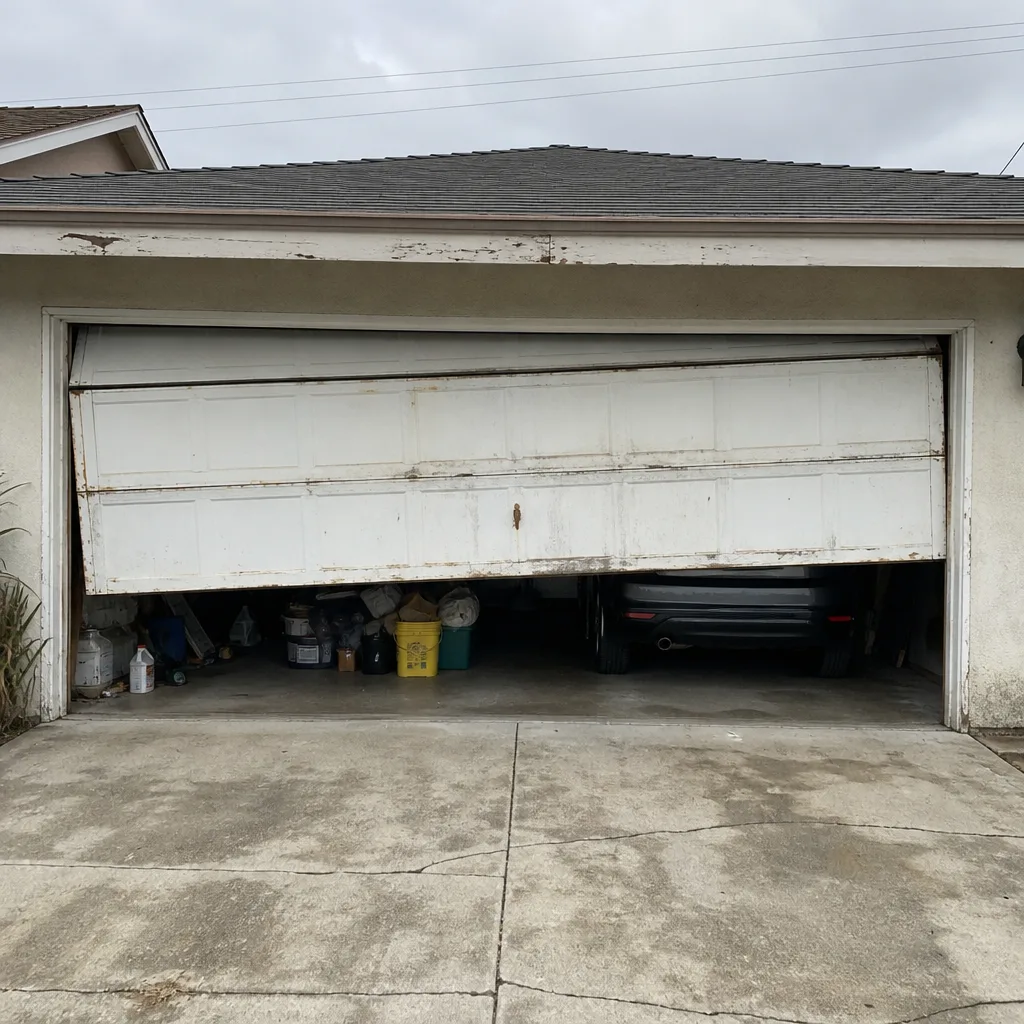
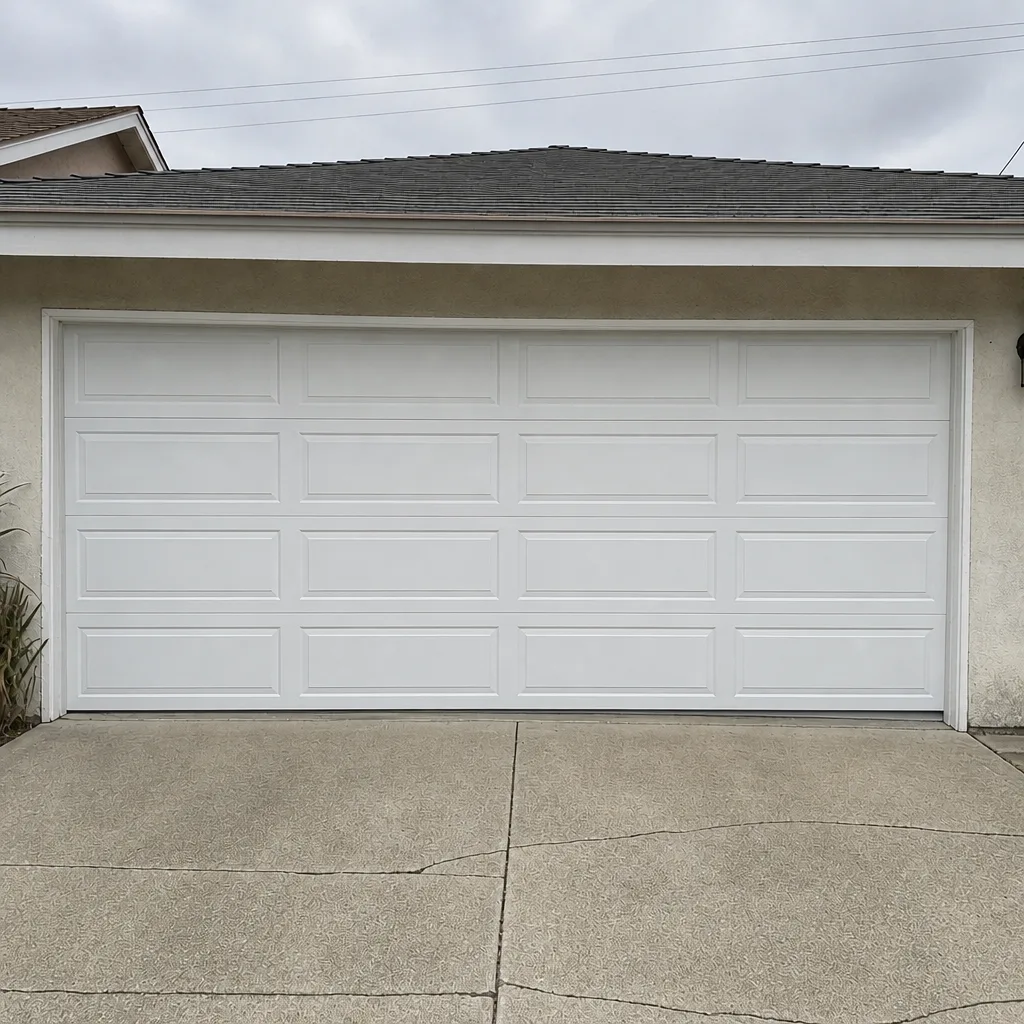
See the difference
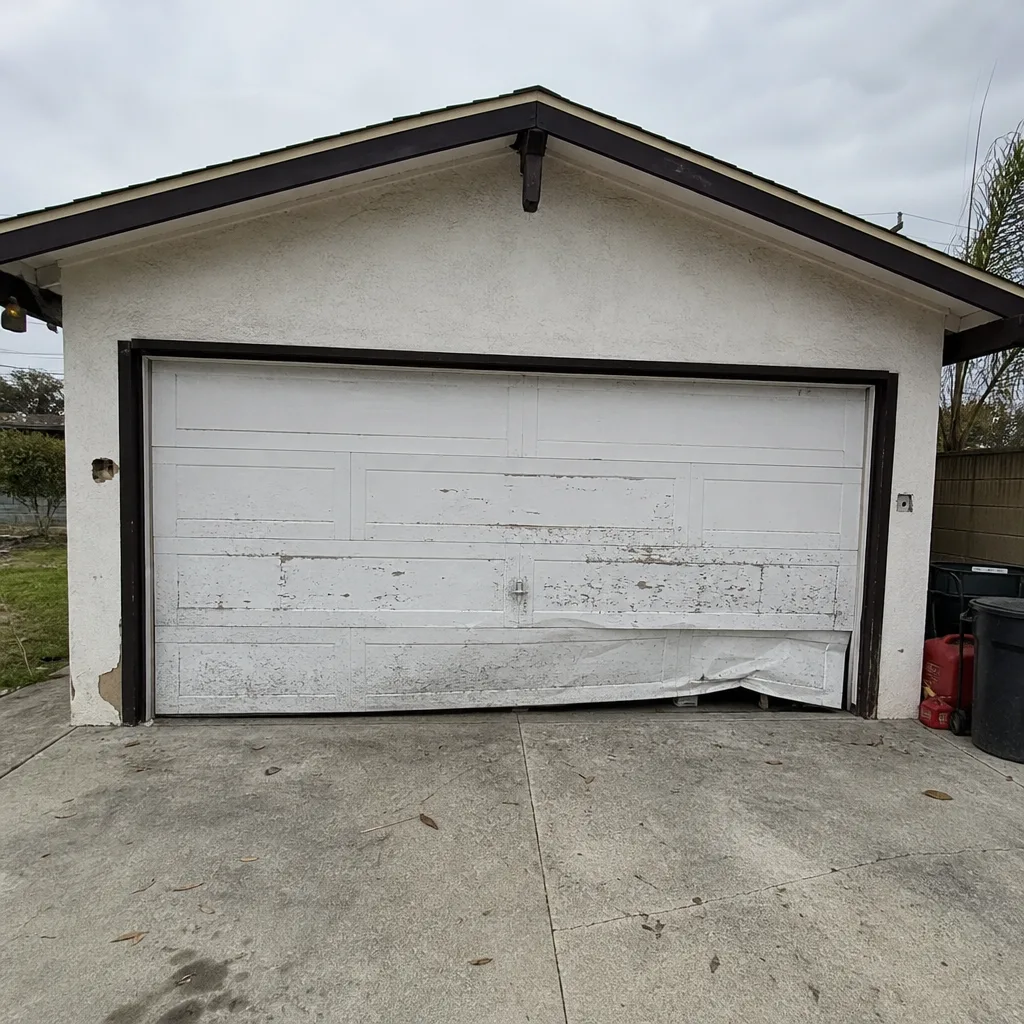 Before
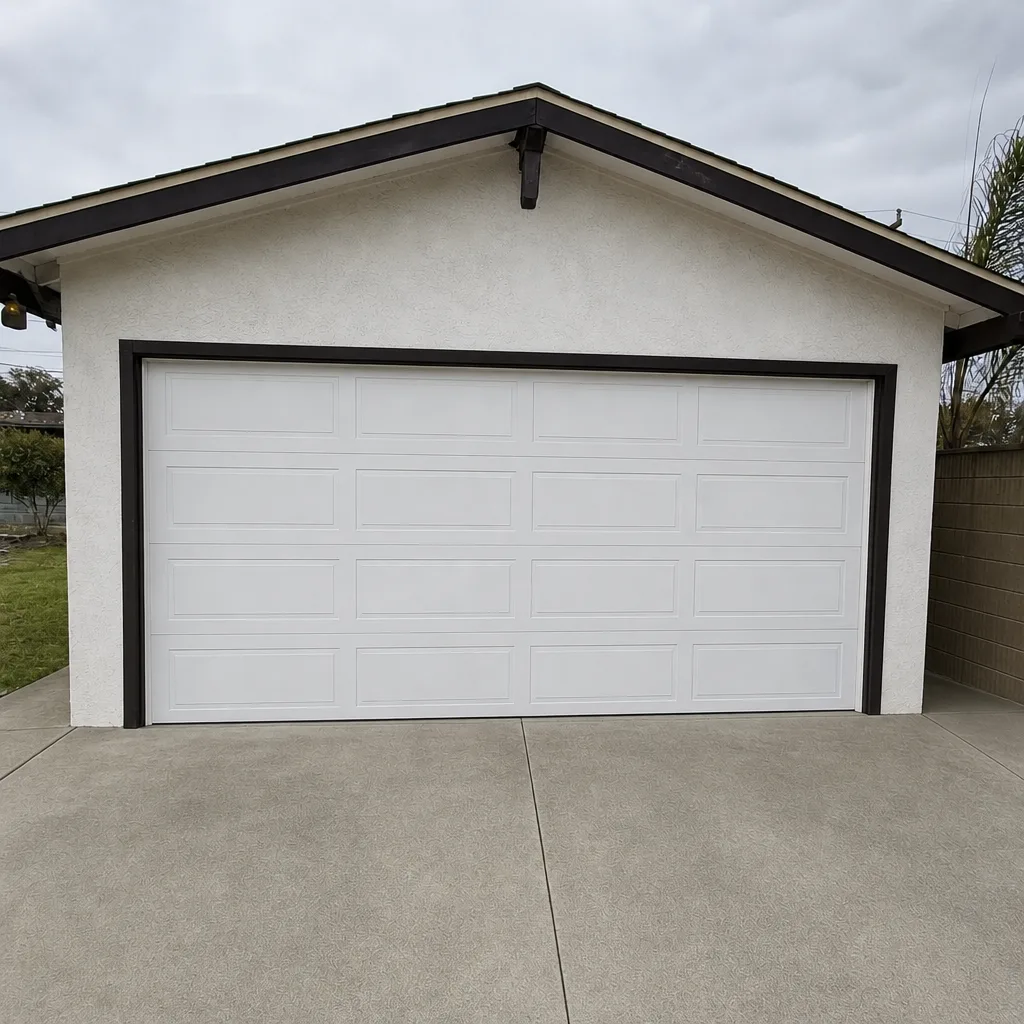 After
 Before
 After
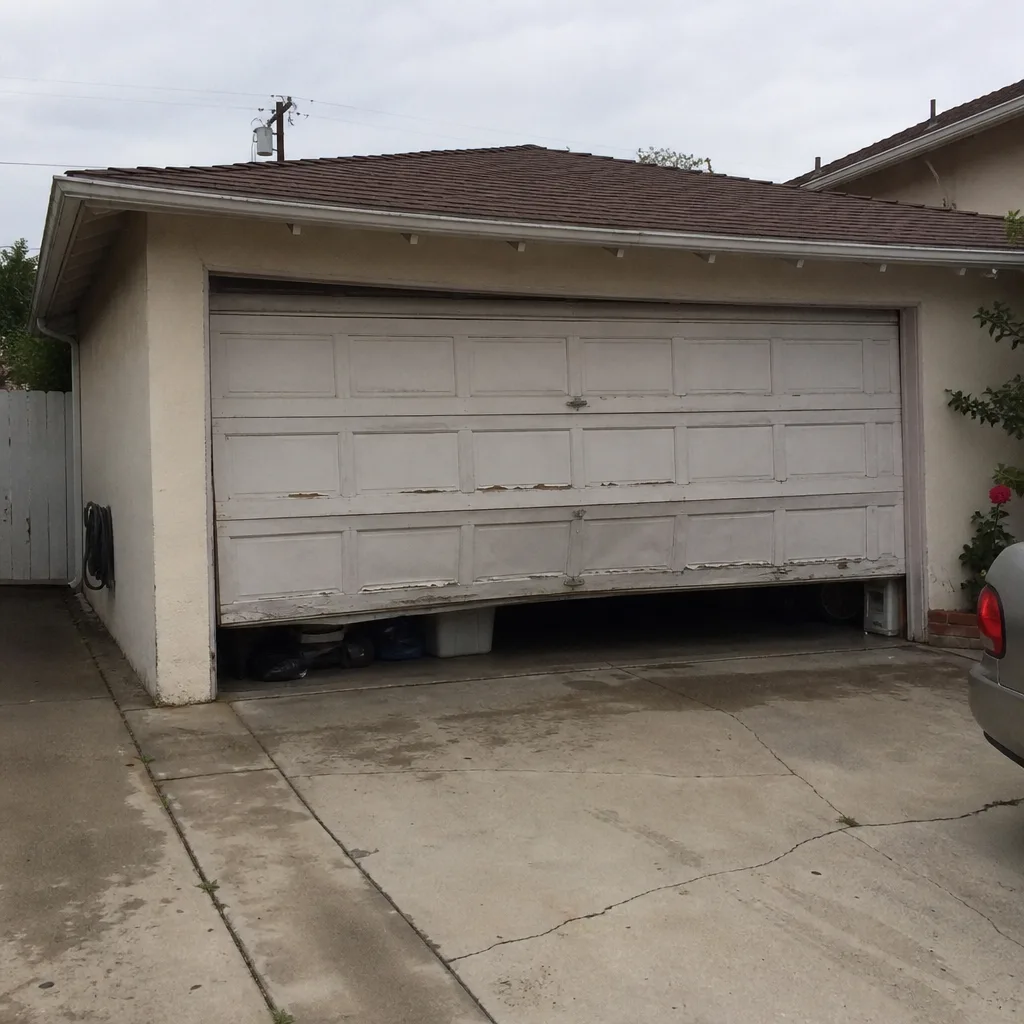 Before
 After
When to Call a Professional
Some garage door problems are obvious: the door won’t open, the spring snapped, the opener grinds and stops. Others are subtle: the door sits slightly off balance, the rollers sound rough, the opener reverses before the door touches the floor. The common thread is that these symptoms rarely fix themselves. A door that’s slightly off balance today is a burnt-out opener motor in six months. A roller that’s rough today is a damaged track next year. If you hear grinding, banging, or rubbing sounds when the door operates, or if the door doesn’t move smoothly through its full travel, call before the problem compounds. Torsion springs and cables are under extreme tension and should never be adjusted, removed, or replaced by anyone without the proper training, tools, and safety procedures. Garage door opener repair is not a DIY project for the same reason: the electrical, mechanical, and sensor systems interact in ways that are easy to misdiagnose. Garage Door Service Norwalk offers free estimates in Norwalk. Call (833) 589-9971. We answer 24/7. Fast dispatch from 7am to 7pm, Sunday through Friday.
Frequently Asked Questions
Look up the contractor’s name or license number on the Contractors State License Board (CSLB) website and verify the license is active and the classification covers door work. Any legitimate contractor provides the number immediately. If they hesitate, that’s your answer.
Ask how they size a torsion spring for your specific door. A specialist explains door weight, drum diameter, cycle rating, and wire size. A generalist talks around it. The question takes 15 seconds and tells you everything you need to know.
Springs wear by cycles, and both springs on a two-spring door have cycled the same number of times. Replacing only the broken spring leaves the old one to fail shortly after. Most specialists recommend replacing the matched pair, even though a spring price is per spring, because it balances the door and resets the cycle clock on both sides.
A legitimate quote separates parts and labor. Parts should be named by brand and specification: spring wire size and cycle rating, opener model and drive type, panel manufacturer and finish. If the quote says “new door” or “spring replacement” without specifics, ask for the details in writing before agreeing to anything.
LiftMaster, Chamberlain, Genie, Clopay, Amarr, Wayne Dalton, Craftsman, and Raynor systems each have different logic, connection points, and failure patterns. A technician familiar with your specific brand diagnoses faster. A technician who has never seen a Wayne Dalton torque-master spring is learning on your door. Brand-matched parts and know-how produce a repair that holds.
Same-day service is often available. Call (833) 589-9971 and we’ll tell you the next available dispatch time. We answer 24/7. Fast dispatch from 7am to 7pm, Sunday through Friday. The estimate is free and the price is set by the written quote before any work starts.
The Bottom Line
Hiring a garage door contractor in Norwalk comes down to three things: verify the license, confirm the specialization, and read the quote. The license check is five minutes on the CSLB database and eliminates anyone operating illegally. The specialization check is one question about spring sizing that separates door technicians from general handymen. The quote review is a line-by-line look at whether the parts are branded, specific, and warrantied. We’ve been serving Norwalk since 2014, and we’ve seen every variation of these mistakes. The homeowners who get the best results ask questions before anything else. That’s the whole guide.
Written by the team at Garage Door Service Norwalk, serving Norwalk since 2014.